Thursday, June 4, 2020

Overcoming...Bibliolatry - For greater understanding - June 4, 2020


BIBLIOLATRY: excessive reverence for the Bible as literally interpreted.

   I learned this word from one of my professors in rabbinic school. 

 It sounded complex. 

 It also sounded like something I should never do.  

  I have tried to live up to that value (of “no excessive reverence”) throughout my rabbinate.  

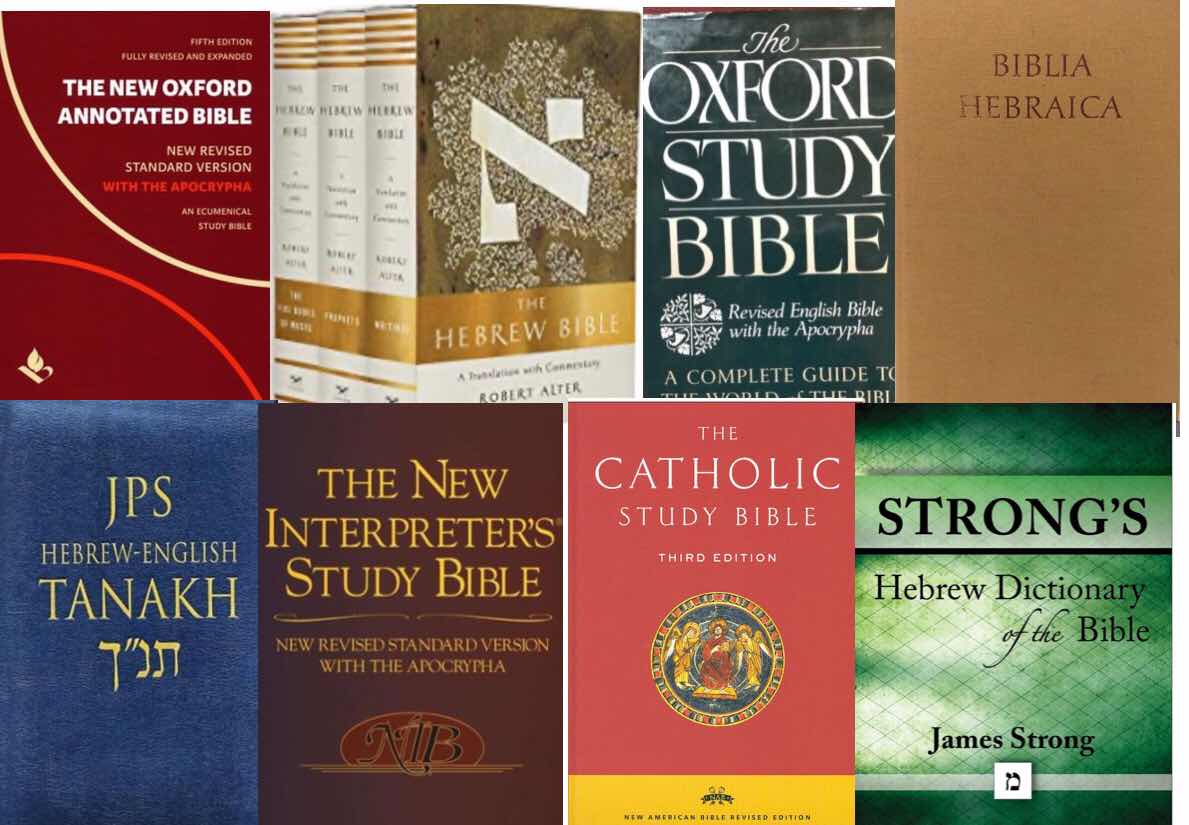
  That is why I have led study sessions on biblical books with a wide range of translations in front of me, including the following: the new Jewish Publication Society translation; the New Revised Standard Version; the Revised English Bible; Robert Alter’s translation; Richard Elliot Friedman’s translation (Torah only); and the New American Bible, Revised Edition.   

    Of course, for me, and for the groups I have led, the Hebrew text has always been the starting point. If I am fortunate, there is someone present with a Greek text as well.  

     This multi-faceted approach to Bible study is an antidote to bibliolatry.  Scholars continue to discover that ancient biblical texts were dynamic, rather than static.  The Dead Sea Scrolls shed light on the long process of development of the wording itself that led to the Bible that we know today. 

      When I was a junior in high school, after my physical education class, we had a half-hour wait until we went upstairs for lunch.   One of my classmates brought his Amplified Bible with him to school every day.   That text was a catalyst for a lively discussion among several of us:  a Reform Jew (me), an Orthodox Jew, an agnostic, a Mormon, a not-so-active Catholic, and our evangelical friend with the Bible.   That went on for months.   My classmate with the Bible did ask great questions when we sat together at lunch, after our locker-room discussions on the passages he presented didn’t resolve much, other than revealing our differences.   I am not so sure that was okay with him, other than the fact that he fulfilled his desire to witness his faith.  Yet, our diversity of opinion was fine with me.   Wouldn’t you know that my Bible-carrying classmate sat next to me at my high school graduation! 

    I know that my classmate’s perspective on this holy book was heartfelt and, sometimes, piercingly insightful.  He had ready answers to questions for which I am still formulating what I believe, because, sometimes, matters of faith require constant redefinition as we move along the life cycle.    

     One thing I know for sure:  he read that book.  He read a lot of it.  Perhaps he focused on the commentary of one interpretation too much for my taste.  But he read it. 

     And that is why it was upsetting to see the leader of the free world fashion a photo-op in front of a church near the White House with a Bible (not “his” Bible, “a” Bible, he reportedly said) in his hand.    The manner in which he cleared the path to the church with his entourage of “power” continues to spark debate, but people who were nearby, PEACEFUL protesters, were forcibly moved away from this church which many past American presidents had visited as a matter of course.   I said, “past,” not “present.” 

    Holding up a Bible that is, to the one holding it, just “a” Bible, makes that book an object.  It also means that the person holding it is trying to merge with the object, perhaps to suggest that book and person should, together, elicit reverence from the people who see that image.  I know that some people responded exactly that way. 

     In my view, that would be actual bibliolatry, where it’s just the image of the book, not what is inside, that makes the difference.   The association of the person with the book is, perhaps, anthropomorphized bibliolatry, as if he (in this case), embodies teachings that some people believe to be primary in the text:  order, strength, elimination of perceived enemies of God, and veneration towards people who are thought to pave the way for those whom they view as “true believers.”

     Of course, what’s in that text?  Off the top of my head, I would cite these verses:

    “You shall have no other gods beside me.” 

   “You shall not take the name of your Eternal God in vain. 

    “You shall not bear false witness against your neighbor.” 

     “Love your neighbor as yourself.” 

    “Justice, justice, shall you pursue.”

    “Do not oppress the stranger, for you know the feelings of the stranger, having yourselves been strangers in the land of Egypt.” 

     “What does God require of you?  Only this: to do justly, to love (acts of) mercy, and to walk humbly with your God.” 

      “They shall beat their swords into plowshares, and their spears into pruning hooks. Nation shall not lift up sword against nation; neither shall they again train for war.”

      “Six things the Eternal One hates; seven are an abomination to God: a haughty bearing, a lying tongue, hands that shed innocent blood, a mind that hatches evil plots, feet quick to run to evil, a false witness testifying lies, And one who incites fellow human beings to quarrel.”

       Once we look at these and other texts, and speak of them over and over, we move beyond bibliolatry to true understanding. 

      In the Chapters of the Rabbis, Pirkei Avot, Ben Bag Bag declared: “Turn it, and turn it, for everything is in it. Reflect on it and grow old and gray with it. Don’t turn from it, for nothing is better than it.” 

     Here I am,  old (but young at heart) and gray (well, my beard is), and I haven’t turned from it yet.    

      May new understandings continue to flow from this text for everyone one of us, so that the greatest wisdom of the book in our hands, and its teachings of love and peace, will always suffuse our hearts and souls.  


Monday, June 1, 2020

MAY THE LIGHT OF YOUR FACE - JUNE 1, 2020

  “May the Eternal One cause the light of the divine face to shine on you and be gracious to you.”
(Numbers 6) 
May the light of Your face, Eternal One, illumine our goodness. 
May the light of Your face focus a spotlight on our compassion. 
May the light of Your face warm us with care. 
May the light of Your face inspire us to listen, and listen more, and, only then, to respond with a sense of increased clarity. 
May the light of Your face enable us to turn our recognition of your Oneness into acceptance of people where they are 
So that we can move forward together to where we all should be. 
And...yet...
May the light of Your face force out of the darkness the hatreds that hold us back so we can see them for what they are. 
May the light of Your face reveal what is inside of those people who desire to hold on to the power that sustains and furthers oppression. 
May the light of Your face make it possible for us to understand those who feel that they are at the end of their rope, with no hope left, with no end in sight to systems that perpetuate prejudice and discrimination. 
May the light of Your face, Eternal One, infuse us with Your grace, spread over us Your  protection that will keep all of Your children safe and secure, and grant us Your favor, that encompasses every human being. 
May the light of Your face, Eternal One, enlighten us so that we will 
do all that we need to do 
to turn strife into opportunity, 
grief into comfort, 
discord into connection, 
conflict into hard-won and lasting peace.

Saturday, May 30, 2020

“We had a plan” - Column for the June, 2020 El Paso Jewish Voice

     We had a plan for 2020.   

      After my retirement from the active congregational rabbinate at the end of June, Rhonda and I were going to move to a community in the Midwest that we knew quite well.   We had not yet determine what we might do in terms of activities and service to local organizations, but we believed that our connections would organically develop over time. 

       Normally, I might describe a need to alter our course for the coming months by referring to the Yiddish saying, Mann Tracht, Un Gott Lacht, (Man Plans, and God Laughs.) 

       I don’t believe in a God who would laugh at what is happening now.   I do believe in a God who would help us to be grateful for our lives, guide us to find new ways to promote healing for ourselves and others, and inspire us to sustain communal hope and to brighten our days enough so that we won’t lose our sense of humor. 

      My path in May and June towards retirement was always going to include organizing and downsizing files and my collection of books.    I had planned to  continue leading weekly study groups, conduct worship services, bring the Religious School year to a close (on May 3), officiate at a group Adult Bar/Bat Mitzvah (on May 2), and hold a Confirmation service for our oldest students in Religious School.  

       Most of that is still happening, just not in person.   Confirmation will wait until we can be in one another’s presence again, and there are other individual ceremonies that will happen in a virtual space. 

       So how is this retirement going to be different than the retirement I expected?  I will never know.   I suppose that we do have only one world and one existence, despite the fact that the alternate timelines of my favorite science fiction series do intrigue me.  

       What I do know is this:  I was ordained almost 39 years ago.  I have notebooks containing articles by me and about me from local and national press, Bar/Bat Mitzvah programs, High Holy Day sermons, and photos from significant family and communal events.  I have been reviewing some of those materials in recent weeks.   

    These materials describe my presence at special moments in people’s lives.   They recount my reflections on the meaning of Jewish holidays and personal and congregational milestones.   They chronicle my efforts to advocate for people in need, combat bigotry and prejudice, foster cooperation among people of different faith groups, and gather people together for study and discussion.   They trace my interest in music as a way to give voice to what we hold inside our Jewish souls.   They demonstrate how much Rhonda and I have done together to make Judaism come to life for the communities where we have lived. 

        During our last Religious School session, held on Zoom, I asked the members our learning community what Jewish values they believe are important now, more than ever before. They cited principles that could have been chosen at most any time: being attentive to one’s own health; community; practicing Judaism at home; kindness/Chesed; remembrance; family; generosity; peace in the home/sh’lom bayit; tzedakah; acceptance; patience; connection; compassion; joy/simchah; and gratitude.     

       Soon after the conclusion of our online meeting, one of the parents called me and asked Rhonda and me to go outside on our driveway.  The Religious School families had organized a thank-you drive-by caravan for our years serving Temple and the Religious School.   

     They were demonstrating one of the most central Jewish values that has sustained our community over the centuries:  adaptability.   

      I can only think as their cars passed by our home, that God had blessed their secret plan...and that God was laughing and smiling at their success.   

     And that is how I will go into the next chapter of my rabbinate: ready to expect the unexpected, and prepared to serve in any way I can no matter where I will be.  

     Rhonda and I thank Temple Beth-El, the Las Cruces community, and the regional Jewish community for the opportunity to be partners in enhancing Jewish life.   May we always be strong and  gain greater strength for ourselves, so that we can strengthen one another. 


Thursday, May 28, 2020

If there are needy among us - Words of Torah for the second day of Shavuot Torah reading - May 28, 2020

Words of Torah for the Second Day of Shavuot, 5780 from Rabbi Karol


“There shall be no needy among you.” (Deuteronomy 15) 

There are always needy among us. 

The needs depend on the situation. 

Some are more dire and material, when normal sources of well-being and sustenance may not be readily available. 

Some needs are related to our physical ability to maintain good health at this time. 

Some needs are intangible.  

We need hope. 

We need healing. 

We need a listening ear if we have faced any type of loss.  

We need reassurance for a secure future.  

We need others to acknowledge that our perceived needs are real. 

We need respect and consideration. 

We need to know that we can depend on those closest to us, as well as people we don’t know, to keep us all safe.  

We need love and connection.  

We need to find the peace within ourselves that will allow us to move forward.  

We read in Psalm 145,

“You open Your hand, Eternal One, feeding every creature to its heart’s content.” 

Eternal God, feed us, guide us, grant us protection under Your merciful shelter.  

Friday, May 15, 2020

Release from Hatred - D’var Torah - Parashat Behar/Bechukotai - May 15, 2020

RELEASE FROM HATRED - D'var Torah for May 15, 2020
    For several weeks now, the Anti-Defamation League has been holding a series of webinars under the general title, “Fight Hate from Home.”  
  This week, the ADL released its annual of audit of antisemitic incidents in the United States for 2019. 
   I don’t think I have to give you the actual numbers for you to know that there has been an increase in overt expressions of hatred against Jews in American communities. 
   You have probably heard of the violent attacks, harassment, episodes of swastikas and hateful messages sprayed onto synagogues and other buildings housing Jewish institutions.  
   Antisemitism is coming from all across the spectrum of ideology, sometimes inadvertently, if you can believe it, but, most often, based in perspectives of grievance that see Jews as perpetrators of the world’s ills, now including the Coronavirus, and as manipulators and puppeteers controlling national and international events.   
    Such views were already present before the arrival of COVID-19 in our country.   As in past centuries, when plagues have taken many lives and Jews were blamed for the deaths, some of that is happening now.  
    Perhaps the worst image to appear at an open up rally was in Columbus, Ohio.  Demonstrators carried a poster bearing a rat portrayed in blue, decorated with a Star of David and wearing a kippah.  Blue stripes were laid out above and below the rat.  It was a morphed Israeli flag. The words on the placard read, “The Real plague.”
   In response to this image, Ohio State Representative Carey Weinstein spoke about how he had served in the Air Force to defend the right of people to express themselves and to advocate for his right to speak out in opposition, if he disagreed.  He said,  “There’s a long history of Jews being blamed for plague, for disease, being scapegoated for problems like this ... and it’s not happening – not here, not now, not today not ever while I’m around….Our people have learned the lessons of what complacency could look like in the past or allowing hatred to percolate. ... or allowing it to become mainstream. It can never become mainstream. It requires a strong response.”   
     Some of these expressions continue to this day.   Holocaust imagery has been finding its way into many recent expressions whereby people facing stay-at-home directives have compared themselves to Jews in World War II who were confined in Ghettos, or deported to Concentration Camps, and murdered by the Nazis.  
     The Torah portion for this week recounts the practice of the Sabbatical year, when the land would lie fallow, and the Jubilee year, proclaimed every 50 years, when land would return to its original owners.  
     I had hoped that, during these times when we are facing challenges of health and well-being, these hateful expressions would be given a rest.  
     My hopes have been dashed, but not surprisingly, because I know that people often look for someone to blame for what they see as their predicament. 
     People need support.  People need reassurance.  People need to be unified by our leaders.   
    No one needs hatred.   
    As we pray each Shabbat, I try to allow the values expressed in our worship – rest, learning, patience, appreciation, gratitude, and peace – wash over me and reinforce the work that I do within our congregation and with the greater community.  
     Let us be partners in making peace and understanding possible, because we will be better able to stay healthy and safe only if we join with each other as partners who truly care about one another.   
      The Torah reading speaks of proclaiming a release, DROR -  sometimes translated as liberty - throughout the land. 
      May we have release from those who can only hate, and may we use our freedom to spread the love that will see us through this trying time.

Land of Opportunit - Words of Torah for Temple Beth-El Las Cruces NM - May 15, 2020 (Behar/Bechukotai)

WORDS OF TORAH – May 15, 2020

Shabbat Shalom!

       Many struggles in society over the last 100 years, and before, have attempted to engender equality for all people.   In the United States alone, the Civil Rights movement, the supporters of the Equal Rights amendment, the human rights campaign (working for rights based on sexual orientation and gender identity) all have hoped and still hope to bring about change.  In the economic realm, there are a variety of perspectives regarding what constitutes equality in our country, especially the view that we are a “land of opportunity,” the “Golden Land” in which many of our immigrant ancestors came to live and thrive.   Many of us have not wanted to see the United States become, in the extreme, a land of “haves” and “have-nots.”  There are programs for assistance that help people in need to some extent, but there is always more to be done to make this a land of equal opportunity.   That principle of offering support has been activated, on many levels, during the COVID-19 pandemic.   We do not yet know the end of this story, but Jewish values on preserving life while doing what we can to sustain livelihoods point towards a balanced approach in the coming months. 

      The Torah reading for this week describes a theoretical system that was intended to keep people on an equal footing as much as possible in Israelite society.   Every half-century, the Jubilee Year would bring about restorative shifts in society.  Land would revert to the previous owners.  Debts would be forgiven. Slaves (often serving to pay off debts) would be set free.   The Israelites were commanded to begin this annual observance (and upheaval) with a shofar blast on Yom Kippur.  The Torah commanded, “Proclaim a release (also translated “liberty) throughout the land to all the inhabitants” (the quote on the Liberty Bell).   Scholars are not certain that the jubilee was ever practiced to the fullest extent, but they do recognize the values embodied by this equalizing system.   According to the Etz Hayim Torah commentary, we can still learn from this practice that, ultimately, everything belongs to God, that no one should have to feel as if he or she is in a state of permanent servitude, and that no one’s value should be based only on economic terms.  

        This Torah portion envisions countries, organizations, and congregations as communities of equals, where it is acknowledged that everyone has something to offer.    In a community of equals, there are many ways to contribute.  Judaism notes that everyone should give tzedakah – contributions from their own resources based on righteousness and justice – according to their means.  The jubilee should, finally, teach us that we should always strive to attain what the jubilee year sought to restore: unity, self-respect, and hope.  May we continue to sustain these elements as a part of the core of who we are individually and together.  

Thursday, May 14, 2020

Temple Beth-El Annual Meeting Prayers and Message - May 14, 2020

Temple Beth-El Las Cruces held its Annual Meeting tonight on Zoom.    It was a first held in a digital space (hopefully a last...we pray).    As my retirement will begin on July 1, 2020, when I become Rabbi Emeritus, this was an unusual moment in many ways.   Here are the words I shared tonight:  my invocation, an introduction to the Mi Shebeirach, and my annual message.  

Invocation
Temple Beth-El Las Cruces, NM
Annual Meeting - May 14, 2020

Eternal God, 
Make us aware of our strengths
Help us to accept our limitations
Some people think we should be able to do it all
Yet, you have provided us 
with only 
two hands to serve
Two eyes to see
Two ears to hear
Two legs to move forward 
Teach us, God, that we are enough.

Eternal God, 
Make us aware of the needs
That people are too sad 
or too reluctant to share
Some people think everyone should do it all
And always be able to solve their problems on their own
But that is why You gave us 
two hands to serve
Two eyes to see
Two ears to hear
Two legs to move forward to help, to love, to hope,
To act with compassion
Teach us, God, that we are enough.  

And, Eternal God, 
If we have eyes that no longer see as they did in the past
Ears that no longer hear
as well as before 
Legs that move more slowly than ever, or do not even move at all.
Show us...remind us
That we can still see.
That we can continue to listen. 
That can move forward with our minds and our hearts,
That we can sustain our souls so that we will ever be able to
 connect with You,
 the Soul of the Universe, 
May we wake up every morning
Renewed 
Reborn
And may the brightness of the day
And may the moon shining down on us at night
Give us faith, 
grant us blessing, 
And create among us 
and inside of each of us
Light and peace. 
Amen.

Introduction to the “Mi Shebeirach” for healing 
At the Temple Beth-El Las Cruces, NM Annual Meeting 
May 14, 2020
I want to take a moment, 
While we are together,
To pray for healing during this pandemic
For people of all ages whose bodies have been touched 
By the coronavirus,
Some who are still struggling for their very lives
And others who have recovered but still feel the effects of their ordeal;
Healing for the families that have been separated by weeks of quarantine; 
Healing for the loved ones of those who have died of COVID—19, who were not able to be with their family members at a time of need; 
Healing for the spirits of health care workers who have been overwhelmed as they have served patients needing their care;
Healing for those who have experienced upheavals in their occupations and careers, in their learning school environments, and in their future plans;
Healing for essential workers who have put their well-being on the line to serve others; 
Healing for all who seek to move from uncertainty to confidence, 
Resignation to hope.

Rabbi Larry Karol -Annual Message - Temple Beth-El Las Cruces NM Annual Meeting - May 14, 2020

       The year: 2150.   
    The world had returned to normal well over a century before.   Tales of the pandemic of 2020 had been passed down from one generation to the next. 
     Somewhere in southern New Mexico,  a family sat down for their Passover Seder.   They took it for granted that some of their guests would join them in person, in their home, while others would participate from a distance through the magic of the newest version of Zoom.   Surprisingly, they had forgotten the release number. It was 130.18 - better known as “130 CHAI!” 
      They recounted the story of the Exodus as always, from their Passover Haggadah which they had created by merging the best parts of their many favorites that had been handed down by their grandparents and great- grandparents.   
       In this Haggadah, instead of the usual four questions, there were five, with this addition:   
       “On all other nights, when we join for our meal in our home, digital devices are not permitted on the table.  Why, on this night, are our computers placed on our Seder tables in a prominent position?”
       In this Haggadah, the description of the Seder plate added one new symbol,  which was very hard to come by:  the smartphone.   It had to be one of the models used in 2020.    Participants at the seder were always amused that “smartphone” rhymed with “shankbone.”   That is why they thought it fit perfectly on the Seder plate.  
       A new section of the Haggadah recounted the tale of the onset of the COVID-19 pandemic, describing how Jews around the world would not allow themselves to miss celebrating their Festival of Freedom or to be thwarted in their attempts to maintain their communal connections.   This new portion of the MAGGID - the retelling section - told of a year that began like all others, during which Jewish community members gathered in person in their synagogues for study, social programs, worship, holiday observances, fundraisers, and life-cycle events. Then came the rise of the coronavirus.  This special Haggadah outlined the strategies that followed:  teachers met with students of all ages on Zoom; services were live-streamed from the homes of rabbis, cantors and lay leaders; Temple leaders and congregants found ways to overcome separation and isolation to maintain a strong sense of community; singers found ways to unite their voices in song even with the limitations of online singing at the time; calls and check-ins among members made sure everyone was getting what they needed; donations supported worthy causes that offered much-needed assistance; some life-cycle events went on as planned; and planners ascertained the best way to resume in-person events so as to preserve everyone’s health and lives.   
      Another section of the Passover Haggadah, one of most ancient passages, normally stated that there were three things that needed to be mentioned on the holiday, or else the participants would not have fulfilled their observance of the festival.  Those three things are:  Pesach, the Paschal Lamb; Matzah, unleavened bread; and Maror, bitter herbs.  
    In this Haggadah of 2150, there were additions to that section     that appear to have been unearthed in a southern New Mexico congregation.   It seems that the rabbi there, as the early stages of the pandemic continued to require some separation,  asked members of all ages:  “What Jewish value is more important to you now than ever before?” 
       Details of how discussions on this topic were held were sketchy.  But the results of their conversations were clear.   
    The children and their teachers in their school listed these tenets that had the greatest meaning to them: 
  • Taking care of your body and health
  • Togetherness
  • Practicing Judaism at home
  • Kindness/CHESED
  • Remembrance for loved ones, and for those who have died in recent months during this pandemic. 
  • Family
  • Generosity, whereby people support fellow community members going through a hard time. 
  • Peace at home/Sh’lom Bayit 
  • Tzedakah - Righteous giving
  • Acceptance 
  • Community 
  • Patience
  • Being helpful 
  • Connection: Do not separate yourself from the community
  • Compassion 
  • Finding Simchah/joy and happiness amidst everything going on. 
  • Gratitude - finding something for which to be thankful at any time.
   Other members of  the congregation also shared their perspectives, adding these comments at the request of their rabbi: 
  • Performing bikkur cholim, visiting the sick in any way possible, through whatever mode of connection would offer the most comfort.
  • Treating everyone as equally valuable in this world, and being the tough, resilient, logical thinking,  giving, hopeful, and caring people with beautiful souls that Jews have always sought to be. 
  • Staying connected with family and friends near and far.  
  • Remembering that Hillel’s maxim, “What is hateful to you, do not do to your neighbor” could mean wearing masks and distancing enough to preserve the health of one another - and to show concern for each other’s welfare. 
  • Practicing Hillel’s teaching, “If I am only for myself, what am I?” constitutes an expression of love and consideration for our neighbors. 
  • Providing for those who are less fortunate, who deserve our help because they are members of the human family.
  • Pikuach Nefesh, saving a life, so that we will not jeopardize our lives or the lives of others, and promoting healing for those who are ill where and when we are able.
  • Altruism - selfless concern for the well-being of others
  • CHAYIM - life - which is central to Judaism. As God sent Moses to save the lives of the Israelites, we can be like Moses by leading one another to safety, security, health and hope. 
  • Noticing the wonders happening around us in nature, even amid our concerns, and giving thanks for them.
  • Truly trying to understand someone else’s viewpoint, following the rabbinic teaching, “these views and these other views, too, are the words of the living God.”
  • Remembering and (hopefully) learning from the past.
  • And leaving the world better then when we got here -  Tikkun Olam.
 The Haggadah continued:  “And so, they celebrated Passover.  And when the festival was over, they continued, within the best digital spaces available to them, to pray, to study, to meet, to express to one another an unwavering faith in their ability to maintain their bonds with one another and to guarantee their future as a holy congregation.” 
   A footnote in the Haggadah, in fine print at the bottom of the last page, bore this note:  “It was said that the rabbi soon moved on to a new chapter of his life, while his wife continued to work for a time.  They were eventually able to see their growing grandchildren once again, in person.” 
    It was also noted that the rabbi bequeathed to his congregation, and to his relatives and friends, essential teachings, in the form of musical lyrics, based Jewish sacred texts.   Those central principles included these declarations: 
    “Two are better than one, for if one person falls, one will lift up the other.”
    “Every day is a day that God has made: always remember to rejoice and be glad in it. 
    “When you acquire a good name, you do make it for yourself, but when you immerse yourself in the wisdom of your heritage, you receive a piece of something timeless. 
And, finally,   “Choose life, so that you and your children may live well.” 
    And as their Seder ended on that Pesach in the year 2150, everyone at the table, and those whose faces graced the Zoom screens on their devices, exclaimed together:  “Next year in Jerusalem!  Next year, may all be free!   And next year, and in the years to come, may we again sit with each other, side by side, as ONE community!”