Thursday, February 20, 2020

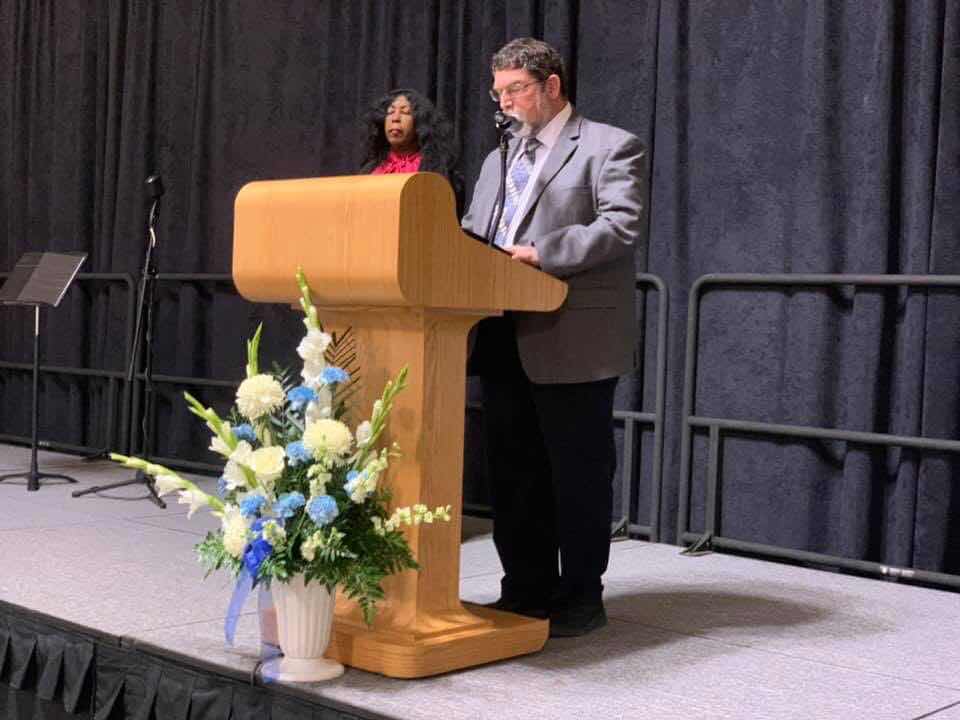
Fairness, Justice and Balance - Invocation for Temple Beth-El Las Cruces Board Meeting - February 20, 2020 (for Parashat Mishpatim)

Eternal God, 

Lawgiver, Guide, Creator,

You have provided us with a roadmap to integrity 

In Your Torah. 

We learn to show fairness and to promote justice

without preference.

We are instructed to show consideration and respect to those people 

Who may oppose us and hate us, 

Even when our impulse might be to rescind our kindness

When we have an opportunity to show it. 

We are directed to remain distant from anyone who would levy a false 

Charge against an innocent person, 

Because through our silence or our verbal assent to the those 

Who would invent such untruths, 

We become accomplices in their crime, whether it is discovered or not. 

The Torah demands that we refuse to take bribes, which can 

Turn the tables of justice so that a guilty person can escape scrutiny or eventual punishment.  

And we know,  Our true judge, that You would want us to remove our support from anyone who would take a bribe to that immoral and illegal end. 

As members of a greater community, we have taken to heart your command to treat the poor and the stranger with compassion and with generosity, having been strangers in so many lands in which we have lived, facing difficult conditions and seeking to overcome threats to our very well-being. 

So now, as we look towards the future, seeking to sustain goodness and holiness in our world, give us hope and strength so that our steps will be firm and our vision far-reaching to spread throughout humanity righteousness, acceptance, and love. 


Thursday, February 6, 2020

Remembering and Honoring Generations Past - Column for the Las Cruces Bulletin - February 7, 2020

        The woman in the photo looked like the years had taken a toll on her, but there was special spark in her eyes.  The text on the back of the photo noted that the year was 1926. 

        The rest of the writing was in Yiddish, the language spoken by Jews in Eastern Europe.  Yiddish is written with Hebrew letters. Some of its words come directly from Hebrew, while others derive from German.  

       Some of my cousins and I were looking at this photo at a gathering after my mother’s funeral in 2004.  We could read the woman’s first name inscribed on the back of the photo: Hene (Chanah in Hebrew, Hannah in English).  

     The last name was eluding us until I examined it more closely.  I realized that it read “Karol.”  We knew then, for certain, that we were looking into the face and eyes of our great-grandmother, who lived in Lithuania, and may have died soon after the photo was taken. 

       In the 1960s, I was first learning about the Holocaust, the systematic extermination by the Nazis of 11 million people, including six million Jews, in Europe during World War II.  My parents told me that they didn’t know of any relatives who were victims of the Holocaust. 

      I thought that was true until my exploration on a genealogical website connected me with a woman living in Jerusalem who had left Lithuania in 1991.   Via email, she told me that she was also a descendant of the Karols from one particular Lithuanian town. We were distant cousins.  

       It was the first time I realized that I had relatives who had remained in Europe during and after World War II.  I would imagine that there were family members who died there as well, perhaps at the hand of the Nazis.   

      I am not sure what life was like for Hene Karol in Lithuania, but it definitely wasn’t easy. 

       About a year ago, my wife Rhonda and I attended a performance of “Fiddler on the Roof” in Yiddish in New York City, a production directed by Academy Award winner Joel Grey.   

      I imagined, while watching and listening to the songs and dialogue presented in the language of our Eastern European forbears, that the musical approximated the life of my ancestors:  simple, difficult, and marked with moments of joy and celebration.  

     The Karols’ Jewish community, like others nearby, may have endured attacks like the one portrayed in the wedding scene in “Fiddler on the Roof.”  

    Those demonstrations of violence and murder came to be known as pogroms. They were nothing but a baseless outpouring of pure hatred and fear.   

      Tragically, the Holocaust took that earlier violence and hatred to an unimaginable extreme. 

       On Monday, January 27, 2020,  I watched the live stream of the commemoration of the 75th anniversary of the liberation (by the Soviet Army) of the survivors of Auschwitz-Birkenau, the largest Nazi concentration and death camp, located in Poland.  From my living room at home, I joined in reciting the traditional mourner’s prayer. 

      There have been survivors of Auschwitz and other concentration camps among my congregants throughout my rabbinate.  Their persistence and their faith have always been an inspiration to me.

      To carry on their legacy, and that of my family, I will continue to do all that I can, along with partners throughout the community, to combat hatred and to preserve freedom and peace in our precious world. 

Friday, January 24, 2020

Promises and Hope - D’var Torah - Parashat Va’era - January 24, 2020

     In the Torah reading for this week, our Israelite ancestors heard this declaration of God’s promises, totaling five, by Moses: 

“I am the Eternal. I will free you from the labors of the Egyptians and deliver you from their bondage. I will redeem you with an outstretched arm and through extraordinary chastisements.  And I will take you to be My people, and I will be your God. And you shall know that I, the Eternal, am your God who freed you from the labors of the Egyptians.  I will bring you into the land which I swore to give to Abraham, Isaac, and Jacob, and I will give it to you for a possession, I the Eternal.”

     This passage establishes the number of cups of wine that we drink at a Passover Seder, and one from which we don’t drink - the Cup of Elijah.   Four plus one equals, in Exodus and Seder math, five. 

   The Torah says that the people could not hear Moses’ message because of “KOTZER RUACH,” which has been translated many ways.   The phrase has been rendered as “broken spirit,” “anguish of spirit,” “despondency,” “crushed spirit,” “shortage of spirit,” and “shortness of breath.”  

    All of those translations add a dimension to the feelings of the Israelites.  Contemporary Bible translator and commentator Robert Alter was the one who suggested “shortness of breath.” Perhaps I should have listed that first. 

   I went to my doctor  last Friday for my annual physical exam.   When the nurse put that device on my finger, which I now know is called a pulse oximeter,  I knew that I wanted to hear him say that my arterial oxygen saturation level was in the mid to high 90s.  And so it was.    And when it’s not, for any of us, only extra oxygen offers us a lifeline.  

    When we say in a stressful moment, “I can’t breathe,” we are expressing a sense of being overwhelmed by a current situation in such a way that we feel we have a loss of control.  We need a lifeline at those times, as well. 

   A people who had been enslaved for their entire lives saw their shortness of breath or spirit as a constant reality.  No container of oxygen would help them.  What they needed was something intangible.  

     What did Moses offer them?   Mose revealed to them God’s pledge of the possibility to choose the labors in which they would engage for livelihood, subsistence, and even personal fulfillment. 

    Moses announced the available gift of an escape from their bondage. Living in slavery was not just characterized by their hard work.   Their shortness of spirit and breath came from the fact that they believed that they would never be anything but slaves.  They could never aspire to anything else.  

    Moses declared that the people would be redeemed.   Redemption can mean an exchange.   Their trade was likely not only about leaving bondage and entering a state of freedom.   The exchange was that the cruel Pharaoh, who considered himself a god, would be replaced in their lives by the God of the Israelites, who would not act with cruelty or oppression.  This God would encourage them to live in freedom and to use that freedom wisely and well based on the God’s teachings, which would be upon their lips and in their hearts for generations to come. 

    Moses told the Israelites that they would be God’s people.  Their redemption, their newly-found freedom, and rules from God directing them to act with respect, goodness and righteousness would bind the people to God, and link God to the people through their prayer, their study, and in their newly refreshed spirits. 

    And where would all of this happen?   Not in Egypt.  Moses assured the people that they would return to the land of their ancestors.  That would be the place where they would apply these new values to their lives in a context of freedom. 

All of these promises, together, were like oxygen to the people to heal their shortness of breath and shortage of spirit. 

   Today, we know, as we live in this land of liberty, that we will best preserve freedom for everyone when our nation offers spiritual oxygen in the form of equal opportunity, choice, the possibility of advancement and upward mobility, a shared sense of purpose that transcends any differences that could set us apart, respect for the law, and a love of neighbors not only in our country but throughout the world. 

    Moses offered the Israelites oxygen to cure their shortness of breath in the form of hope.     May we do the same for one another to assure that freedom, deliverance, redemption, and a deep sense of connection and oneness will envelop the entire human family, all who dwell on our precious planet.   


Monday, January 20, 2020

Invocation - Dona Ana County Branch NAACP Martin Luther King, Jr. Breakfast - January 20, 2020

Eternal One, Creator and Sustainer of us all,
As we join together, open our eyes to the vision that sustained Dr. Martin Luther King, Jr., which led him to declare, as he accepted the Nobel Prize in 1965:
"I have the audacity to believe that peoples everywhere can have three meals a day for their bodies, education and culture for their minds, and dignity, equality and freedom for their spirits. I believe that what self-centered men and woman have torn down, men and women other-centered can build up. I still believe that one day humanity will bow before the altars of God and be crowned triumphant over war and bloodshed, and nonviolent redemptive goodwill will proclaim the rule of the land. I still believe we shall overcome.”
 We will overcome…when we see ourselves as not isolated from one another but dependent on each other for well-being and for hope. 
 We will overcome….when we, in Dr. King's words, continue to be, no matter what the obstacles we may encounter, true participants in society, taking our share of the responsibility to infuse democracy with liberty and substance.
 We will overcome…when we realize that our unity is always enlarged by the alliances that we create and maintain with one another, and that our coordinated action can enhance the love and light that we can share from deep within our hearts. 
  May this gathering, at which we share food for our bodies and sustenance for our minds and souls, inspire us to make Dr. King's dream our dream and to do all that we can to ensure that his dream and our dream will become a reality. 
    Eternal One, give us the will and the strength to make all of this come to be.


Sunday, January 19, 2020

Remarks at Dona Ana County NAACP Las Cruces NM MLK March on January 19, 2020

In looking back on the prayers I have shared at past Martin Luther King, Jr. birthday commemorations in previous years, I came across this quote from Dr. King’s speech that he delivered on April 4, 1967, one year to the day before he was assassinated.  In his speech entitled, “Beyond Vietnam: A Time to Break Silence,” he said,  “We are now faced with the fact that tomorrow is today.  We are confronted with the fierce urgency of NOW.  In this unfolding conundrum of life and history there is such a thing as being too late.  There is an invisible book of life that faithfully records our vigilance or our neglect….We still have a choice today: nonviolent coexistence or violent coannihilation.  This may well be our last chance to choose between chaos and community.  We must move past indecision to action. We must find new ways to speak for peace  . . . and justice throughout the developing world — a world that borders on our doors. If we do not act we shall surely be dragged down the long dark and shameful corridors of time reserved for those who possess power without compassion, might without morality, and strength without sight.  Now let us begin. Now let us rededicate ourselves to the long and bitter— but beautiful — struggle for a new world.”


 I was thinking about what Dr. King might call for an end for today

And what he would want NOW.

He would want  an end to voter suppression – NOW.

He would want a campaign of love to combat hatred – NOW.

He would want us to take opportunities to share our stories with one another so that we can overcome division and fear – NOW.

He would want better education for our children from their pre-school years and greater accessibility to higher education  - NOW.

He want out our honesty and sincerity, and a full heart, for loving our neighbor and welcoming the stranger – NOW.

He would want a return to the teaching that the life of every human being in this world is sacred – NOW. 

There is always more to do.

Judaism teaches – you are not required to complete the work, but neither are you free to neglect it.

So let’s keep working – individually and together – so that we can move closer to creating that NEW WORLD.   Let’s never give up hope and let’s start NOW.


Friday, January 17, 2020

Invocation - Temple Beth-El Las Cruces Board of Trustees Meeting - January 16, 2020

Invocation - Board Meeting - January 16, 2020


Eternal God, 

You who teach us paths of wisdom and righteousness, 

Help us to truly distinguish between right and wrong. 

As the prophet Amos declared to the people of Israel 

That God would scrutinize their integrity 

By placing a plumb line in their midst to evaluate their deeds,  

Enable us to honestly assess

How much we are able to follow the standards

Of our tradition 

For engendering respect, 

For offering support, 

For approaching one another with compassion, 

For welcoming strangers, 

For providing encouragement to those who selflessly and willingly serve our community, 

For seeing Your face in the face of every human being 

For preserving our world for the future, 

For pursuing justice, 

For advocating for freedom in our midst and for all people. 

Open our eyes to see You by our side and in our midst

As we do the sacred work 

Of sustaining, with warmth and with joy, 

this Beit-El, this House of God, our holy community.  

And we say Amen. 

Friday, January 10, 2020

Our Legacy, Our Pride, Our Blessings - D’var Torah for Parashat Va-y’chi - January 10, 2020

   Jewish and Proud. 

   That was the tag-line for the American Jewish Committee’s call for Jews, this past Monday, January 6, to post a photo with that message on social media, or to wear a Star of David necklace, a kippah, or something visible that is an identifiable Jewish symbol.

     Jewish and proud was also an underlying theme of the anti-hate march across the Brooklyn Bridge last Sunday, January 5, 2020, which brought together Jews from across the spectrum of the community and others to protest anti-Semitism and the violence against Jews before and during Chanukah.  

      I was attending the Pacific Association of Reform Rabbis conference in Palm Springs, California, from last Sunday through Wednesday.   Many of us, both women and men, walked through the hotel wearing our kippot between sessions without a second thought.  

    The American Conference of Cantors had gathered in the same hotel for their midwinter retreat.   Yes, more kippot, for sure. 

     As far as I know, there were no discouraging words, negative comments, or incidents, in response to our presence.  

      Yet,  Jews in New York, in various American metropolitan areas, and in European cities, especially those who regularly wear identifiable symbols,  are now, even more than before, in a position of needing to be cautious and watchful for someone who might see them as a target, based on something that the potential attacker hates.  

     We can’t limit descriptions of the perpetrators of anti-Semitic acts to any one particular perspective.   

      Some people associate all Jews with what they don’t like about the State of Israel. 

     Some people link all Jews to their favorite conspiracy theory about Jews trying to assume control of the world, seeing Jews as trying to thwart the hegemony and manifest destiny of white male Christians.

     Some people still see all Jews as guilty of the crime of deicide, putting Jesus to death 2000 years ago, which makes us worthy of eternal scorn and punishment.

     As we learned from the attack on Tree of Life synagogue in Pittsburgh in October, 2018, some people see Jews as insidiously manipulative of populations, supporting the compassionate harboring of refugees and asylum seekers in a way that would alter the supposedly traditional racial composition of America.   That makeup of our nation has been changing in any case.    

     On the night of the attack on the Chanukah party in Monsey, New York, Rabbi Stephen and Donna Karol were in Jerusalem, visiting 40 of our cousins who are part of the ultra-Orthodox community there.    Steve and Donna told me that they had a wonderful time with our family.   

     We know well about the characteristics of the Jewish community, locally, nationally and internationally. 

      Our diversity is a fact of life. 

      Our disagreements are sharp and all too enduring. 

      Our expressions of our opinions can sometimes be described as cantankerous, arrogant, narrow-minded, and disrespectful.  

     But we are SO MUCH MORE. 

    In the Torah reading for this week, Va-y’chi, Jacob, also known as Israel, offered his final message to his family.   

      Genesis Chapter 49 begins: “Jacob then summoned his sons, saying, ‘Gather ‘round that I may tell you what shall befall you in days to come.’”

   He proceeded to speak of his sons in forthright terms, not always glowing and complimentary in his comments, but realistic for sure.     

      What words would we want to hear now, in 5780, as 2020 begins, at a time when we are concerned for our safety in ways we may not have expected to be even two years ago? 

       We do need realism, but that realism isn’t only about what’s wrong with us, because there is so much that is right about who we are. 

     As members of a Jewish community, there are blessings which we bring to ourselves, to each other, and to the world. 

       We declare that time can be holy and special, sometimes more sacred than space, because Judaism enables us to celebrate that holiness of time in our homes, in our actions, and whenever we gather together. 

       We have the capacity to practice Jewish values that guide us away from divisiveness and disrespect.   Judaism teaches us to see the face of God in every human being.   Our tradition directs us to treat all people with compassion and understanding.  We declare our love for God when we pray and when we pass into the threshold of our homes by the mezuzah that bears, on its parchment, words of love and welcome.  

       Conspiracy theories, rumors, unfounded attacks and innuendo should not define us.  And we should not absorb or be misled by pervasive misinformation or disinformation that are found in extreme excess the world over, claims that could cause us to turn on one another. 

     No. We believe in the acquisition of knowledge through our own personal exploration and, more importantly, through our partnerships in learning.   God is present when words of Torah pass between us.  God speaks to us when we study. We speak to God when we pray. 

     Our experiences throughout history remind us that our ages-long quest for freedom, embodied in the Exodus from Egypt, remembered at every Pesach Seder, continues today.  We still seek to preserve our freedom and to work for the freedom of all people, so that they will not face cruelty, prejudice, discrimination, and oppression, and so that we will not be inadvertent partners in the marginalization of any of God’s children.  

      We Jews in America are like a mirror of Jews in Israel and in other communities around the world.  We don’t always see eye to eye, but we are committed to the welfare of our people, our extended family, wherever we live, so that we can continue to share the best of the gifts of our heritage with the entire human family. 

      We are Jewish, and we are proud.    May we continue to put our best foot forward, as individuals and as a community, as we step out, every day, into a world that needs our love, our wisdom, our concern, our compassion, and our hope.