The
rabbi was about ready to get that last High Holy Day sermon underway. He had experienced a meaningful Rosh
Hashanah with his congregation. His Yom
Kippur evening sermon was done. After a
couple of community meetings which had reminded him of the challenges of
finding common ground and engendering good values, he welcomed an opportunity
to focus on the principles embodied in the Torah and Haftarah readings for Yom
Kippur. Every year, these portions challenge
us to recognize that the teachings of our heritage are near and dear to us so
that we can easily observe them. We hear
the words of Isaiah, who proclaimed that prayer and ritual mean very little if
they don’t lead us to care for our fellow human beings and attend to their
needs. We tell the story of Jonah to
remember that every person should have an opportunity to find their way back to
goodness if they have, for some reason, gone astray.
The rabbi tried very hard not to think
about politics. It didn’t work. His mind wandered to certain expressions by
national and international leaders that included unbridled ridicule and
statements intended to isolate certain citizens. The rabbi had thought that
leaders are supposed to lower the temperature of potential conflicts that could
go nuclear. He didn’t see that
happening.
The rabbi thought back to these words,
once spoken by a former president at the national prayer breakfast: “At times, it seems like we're unable to
listen to one another; to have at once a serious and civil debate. And this
erosion of civility in the public square sows division and distrust among our
citizens. It poisons the well of public opinion. It leaves each side little
room to negotiate with the other. It makes politics an all-or-nothing sport,
where one side is either always right or always wrong when, in reality, neither
side has a monopoly on truth. And then we lose sight of the children without
food and the people without shelter and the families without health care.
Empowered by faith, consistently, prayerfully, we need to find our way back to
civility….progress doesn't come when we demonize opponents. It's not born in
righteous spite. Progress comes when we open our hearts, when we extend our
hands, when we recognize our common humanity. Progress comes when we look into
the eyes of another and see the face of God. That we might do so -- that we
will do so all the time, not just some of the time -- is my fervent prayer for
our nation and the world.”
The rabbi knew that times had changed since
then. He needed time to think. So he decided to get out of town just a
short distance. He drove to one of his
favorite spots that overlooks his city, near the majestic mountains that tower
over his beautiful locale. He got out of
his car and gazed at the length and breadth of the town. But he hadn’t rested
well on the previous nights. He sat down
at a nearby picnic table. It was all too
easy to close his eyes and….
The next thing he knew, he was standing on a
higher mountain, looking across a great valley to another range of hills. In
between, there was a river going to the north, and, to the south was an unusual
looking sea. He thought a moment and said to himself, “Wait, I know exactly
where I am. Where are the other rabbis on my trip?” He was imagining himself in
Jordan, on a tour of the Middle East in January of 1996 with 54 of his
colleagues. He saw some of them milling about at first…and then they
disappeared.” He was alone…or was he?
There was another man nearby, with a long
white beard and an impressive white robe, just looking out over the expansive
landscape before them.
The rabbi knew that he was standing on Mt.
Nebo, the famous overlook of the Jordan Valley from where Moses was allowed to
look across to the Land of Canaan, the Promised Land, a place where the
Israelite leader was not allowed to enter.
That privilege was given to Joshua.
The rabbi knew that, on his visit in 1996,
he had been able to stand in that spot because two leaders had found their way
back from a continued state of war to a measure of peace. King Hussein of
Jordan and Israeli Prime Minister Yitzhak Rabin completed a process of turning
their two nations from mutual hostility to clandestine cooperation in the 1970s
and 1980s to the beginnings of a civil dialogue and, finally, to peace in 1994.
The rabbi’s thoughts were interrupted when
he felt a tug on his coat. The man with
the white beard had approached him to make some connection.
“Amazing view, isn’t it?” he asked.
The rabbi was startled at first, but then
he regained his composure and said, , “I can’t believe I am seeing this view –
it is incredible, and it’s only possible because these two nations made peace.
The hills on both sides are like mirror images of each other. The road up to
Amman looks a lot like the road going up to Jerusalem, winding around the hills
near the cities and towns. You feel like you are doing a real ALIYAH – going
higher and higher – literally.”
The man with the long white beard said, “I
never had the chance to see Jerusalem from the ground – only from above.
Heavenly Jerusalem – Y’rushala-yim shel
ma’alah – is one of my favorite places to visit. It’s a lot quieter than
the Jerusalem you know.”
The rabbi was puzzled, “So why haven’t you
been to Jerusalem like I have?” The mystery man lamented, “I wasn’t allowed to
see what you have seen. My assistant and
successor was, though. His name was…..”
The rabbi interrupted, “Joshua? I had a
feeling. Then I am speaking with…Moses?”
“How did you know?” asked the stranger who
was no longer a mystery.
The rabbi’s uncertainty turned to
excitement. “You look a lot like you do in the movies – even Prince of Egypt
–wow, how did they know? I seem to have
these unexpected encounters just when I need them. So, Moses--by the way, you
look great for 120 - what did you learn about shifting conflict towards
civility and peace during all those years of leading the Israelites in the
wilderness? I know what it’s like to lead a congregation – there are always
challenges along the way.”
Moses looked at the rabbi, “Sounds like we
have a lot in common. I will answer your questions. So you were amazed at being able to stand
here, were you? Don’t think I haven’t kept up a little with history over the
last 3200 years! I was glad to see my descendants and some of their neighbors
start to figure out how to make peace by identifying their common goals, trying
to discover a way to build up their countries without the threat of war, and
being willing to share all kinds of knowledge and resources because it would
bring them mutual benefit. And it couldn’t have happened unless they toned down
the rhetoric at some level and stopped talking about how much they hated each
other. I know they may not be doing all
of that now as much as they had before.
Hopefully, they will be able to continue to engage in honest and civil
conversations about what it would take to make peace not only among leaders,
but also among the people. I have seen where it has worked, and, also, where it
hasn’t. Hatred and demonization of
ideological opponents persist even within each of these two countries and in
neighboring nations. It may take a long time to bring complete healing and
peace, but I believe it will happen someday.”
The rabbi wondered, “Moses, I had the
impression that you felt that you hadn’t been treated well as a leader, and I
wonder how you felt about not being able to cross into the land where your
people would settle.”
Moses
said, “Well, I was disappointed, but I realized that our struggles along our
journey had put me in a difficult position. At first, I felt I had to directly
battle with the pessimists and naysayers who kept on shouting, ‘Why did you
take us out into the wilderness where we have nothing? Lead us back to Egypt!’
Even when I reminded them that they were slaves in Egypt who suffered from
oppression and cruelty, some of them didn’t want to remember that part of the
experience. Freedom is a gift, but keeping it requires taking responsibility
and maintaining cooperation. I felt so much better when I had judges and
priests who helped me lead. And when the Israelites turned time and again to
focusing on the uncertainty of their new life, I would still plead to God on
their behalf. I was committed to keeping them secure and together as a
community, because it was all important to me to sustain their newfound
liberty. It took almost everything out of me. By the time I gave my farewell
speech – which you may know as a book called Deuteronomy – I had put everything
into perspective. I accepted that Joshua would ‘take it from here.’ I reminded
the people of all that had happened to them, and outlined rules that they
needed to live by: Don’t gossip, don’t stand by when someone is being harassed
or bullied, offer criticism as gently as possible, and, in your words and
actions, love your neighbor as yourself.
Maybe you know those rules?”
The
rabbi was excited to hear these teachings directly from Moses. “Yes, I know all of those rules, and we still
teach them, discuss what they mean and try to apply them to our lives now. And
you should know, Moses, how much your story as the leader who liberated the
Israelites from slavery in Egypt has been at the foundation of the story of my
country, the United States of America. George
Washington, the first president of my country, was seen as an American Moses. Several
of the founders of our nation, Benjamin Franklin, Thomas Jefferson and John
Adams were asked to create a seal for the newly formed United States – and their
proposal depicted you, Moses, leading the Israelites across the sea. Harriet
Tubman, who fought against slavery in our nation, called herself the ‘Moses of
her people.’ Abraham Lincoln, a president who paved the way for slaves to
become free, saw himself as taking up your role as a liberator. On the night
before he died, civil rights leader Martin Luther King, Jr. spoke as if he was
you, standing here at Mt. Nebo. A man
named Bruce Feiler wrote a book about all these references to you, calling you
America’s prophet. That is in addition to you being so significant to the great
religions of Judaism, Christianity and Islam, as Moshe Rabeinu, Moses our
teacher; Moses the Lawgiver and Liberator, and Nabi Musa, Moses the prophet
revered by Muslims. Your legacy is revered the world over. How does that make
you feel?”
Moses thought a moment and said, “I am
overwhelmed, and extremely humbled. I am
not sure I deserve such an honor. But I
appreciate being remembered, and I hope that my story and the tale of my
people’s journey to freedom is a uniting force in the world.”
The rabbi lamented, “I wish I could say it
is. Sometimes people fight over who really speaks for you. One group or another
says that they have the only correct interpretation about what your teachings
represent. I would have hoped that the universal appeal of your story would
bring people together. Is that even possible in a world where civility is so
hard to come by?”
Moses was assertive in his response, “There
was a good reason they called me Moses the teacher. So listen now, rabbi, to
what I believe. You know where it says at the end of the book of Deuteronomy
that all of the people were standing together in front of me? That was quite a
scene – with people of all ages and all walks of life assembled, listening to
what I had to say. I told them that God’s teachings were in their mouths and
their hearts, and that they should choose life and goodness. One way to choose life and goodness is to
choose and use words carefully, and to listen to your heart and what it guides
you to do. Love your neighbor as yourself really means putting yourself in the
place of the other person, imagining that, when you speak, you are the other
person listening to you. Think about that –see how that feels to you before you
speak. You know in your heart what it means to choose life. I am sure that you have a sense about what it
means to do right and good for others and for yourself. Civility breaks down when we stop using
words that can be encouraging and healing.
Without civility, peace is a distant dream. You know that you couldn’t have ever stood in
this place without someone having let go of hatred and realizing that civil
conversation and peace were well within their reach if they could only commit
to listening to each other and recognizing their common goals.”
The rabbi was awed by what he heard. “So we
don’t have to be stuck with polarization, disrespect and hatred?”
“As
long as you think about those words, rabbi – UVACHARTA V’CHAYIM, Choose Life.”
“And rabbi, there is one more thing. One of my worst mistakes that kept me from
entering that land across the way was when God had told me to speak to a rock
to get water for my people, who were extremely thirsty. They were shouting their complaints to the
point where my brother Aaron and I just couldn’t stand it anymore. So I snapped back in a fit of anger, “Hear
now, you rebels, shall we get water for you out of this rock?” And then I struck the rock and water did come
out, but I was wrong. Totally. My first
mistake was not following, to the letter, the instruction that God gave me to
merely tell the rock to give water but, instead, striking the rock with my
staff. My second mistake was saying that
my brother and I would get water from the rock, when we knew that everything we
were able to do for the people came from God.
And my third mistake was that I called the people rebels. Now maybe they were engaged in a sort of rebellion
at that moment, but I didn’t have to call them names. Afterwards, I felt like a bully, even though
I could have justified my anger by saying that their cries pushed me beyond the
limits of my patience. A leader should
not marginalize his own people like that. Keep that in mind, rabbi, because you
never know when someone may believe that name-calling is actually productive
and acceptable. It’s not. Trust me.”
“Moses,
thank you, again, for being my teacher. Your message is very timely for
me. So where will you go now?”
The rabbi looked away from Moses and out at
the view for a quick second, and then turned around.
He was standing alone, looking across the
Jordan Valley towards Israel and then…..
The rabbi woke up, sitting still at the
picnic table. He stood up and saw again the
impressive local landscape that he had come to enjoy for a few minutes. The
rabbi thought, “If people could only realize that it is possible to reflect, in
our words and actions, the beauty of the world, our lives would be so much
better. As the natural world seems to
foster cooperation among animals, plants, and the land to fashion a vista that
can take our breath away, so can our approach to life do the same if we act
based on unity, respect, and goodness.”
The
rabbi stood in silence, and in the breeze, he began to hear a familiar tune
with its words echoing inside of him….Hinei Mah Tov U-Mah Naim Shevet Achim Gam
Yachad – how good and how pleasant it is when people dwell together. Any place
where people are gathered, he thought, they don’t all need to agree, but they
can find ways to commit themselves to engendering civility and harmony as they
move forward towards whatever promised land is spread out before their eyes and
ready for their arrival.
And so we pray: may our journeys in the year
to come bring us all life and good, blessing and peace.
Source:
National Prayer Breakfast Talk –
President Barack Obama, February 4, 2010.
 I just attended, on November 2-5, Shabbat Shira (Sabbath of Song), the fall worship/music workshop presented by Olin-Sang-Ruby Union Institute Camp in Oconomowoc, Wisconsin. The program was created especially for veterans of the late spring gathering for songleaders, Hava Nashira (come, let us sing). It didn’t take me long to realize that I would be at Shabbat Shira on Shabbat VAYERA, exactly 50 years after becoming Bar Mitzvah.
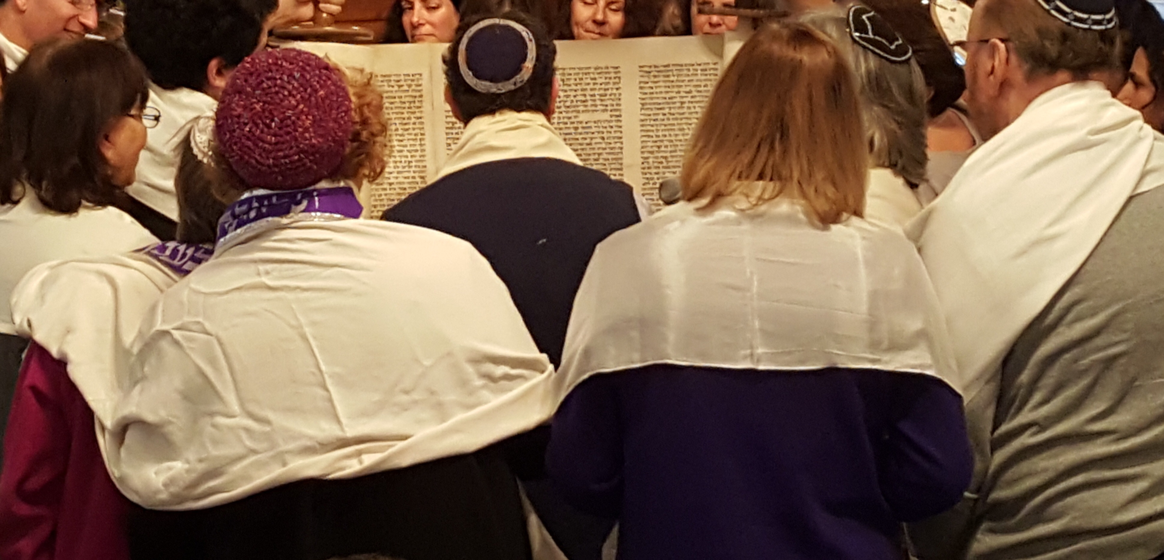

 The themes of being “part of a circle” and sharing light pervaded the Shabbat Shira program designed by the faculty this year. They guided us to create a circle among us that emanated light, and encouraged us to enlarge our circle and to share the light we discovered and created together when we return home. So...opening a door is what all of us who attended Shabbat Shira hope to do when we return to our respective settings of musical leadership. We trust that our community members will, like the guests who visited Abraham and Sarah with unexpected news, accept our invitation to refresh their souls in our communal holy spaces, nurtured by the light of the divine presence that can open our eyes to recognize the circles of faith and song that bind us together as one family.

